


One of the great truths I have learned in my twenty-five years of working at The Center is that giving brings people great joy. I believe it is part of how God designed the human heart. Jesus captured this principle in Luke 6:38 when He said, “Give, and it will be given to you.” Some may view this teaching as self-serving—as if we give only because we expect something in return. But I believe the opposite is true. God has designed us so that generosity itself produces joy. And if that is true, it also helps explain why people who live selfishly often find life so empty. The more we turn inward and live for ourselves, the less joy we ultimately experience.
Arthur Brooks writes about this in his book The Meaning of Your Life. He points to extensive research in psychology examining how people feel and behave after giving their time or money to a worthy cause. The results are remarkably consistent: generosity has measurable effects on happiness and meaning and increases a person’s overall sense of well-being.
We can see this principle even in very young children. Researchers have conducted experiments with children under the age of two in which they are given a handful of goldfish crackers and then invited to give some of their treats to a puppet, which enthusiastically eats them. Researchers then observe the children’s facial expressions—the most reliable way to measure their emotions because children at that age cannot yet consciously disguise their feelings. What they found was fascinating: the children were happiest not when they received the treats, but when they gave them away.
What Brooks discovered goes beyond simply experiencing a moment of happiness. Generosity also activates a deeper sense of purpose and meaning. Giving to others reminds us that our lives are not ultimately about ourselves. Our purpose is found, in part, in loving others. The famous Christian philosopher Thomas Aquinas expressed this beautifully: “To love is to will the good of another.”
Interestingly, this effect appears to be even stronger when we give anonymously, without recognition or praise. When there is no spotlight on us and no opportunity to receive credit, our generosity is more clearly about the good of someone else. One particularly interesting study examined anonymous kidney donors who gave their kidneys to complete strangers. The 114 donors were, on average, significantly happier than the general population after making their donations.
For this reason, Brooks argues—and I strongly agree—that giving should become central to the way we live. Generosity is not merely something we do when we have extra time or money; it is a way of life that shapes who we become. When we make giving a regular part of our lifestyle, we discover something God built into the human heart from the beginning: the path to a more joyful and meaningful life is not found in getting more for ourselves, but in giving more of ourselves to others.
Richard E Simmons III is the founder and Executive Director of The Center for Executive Leadership and a best-selling author.
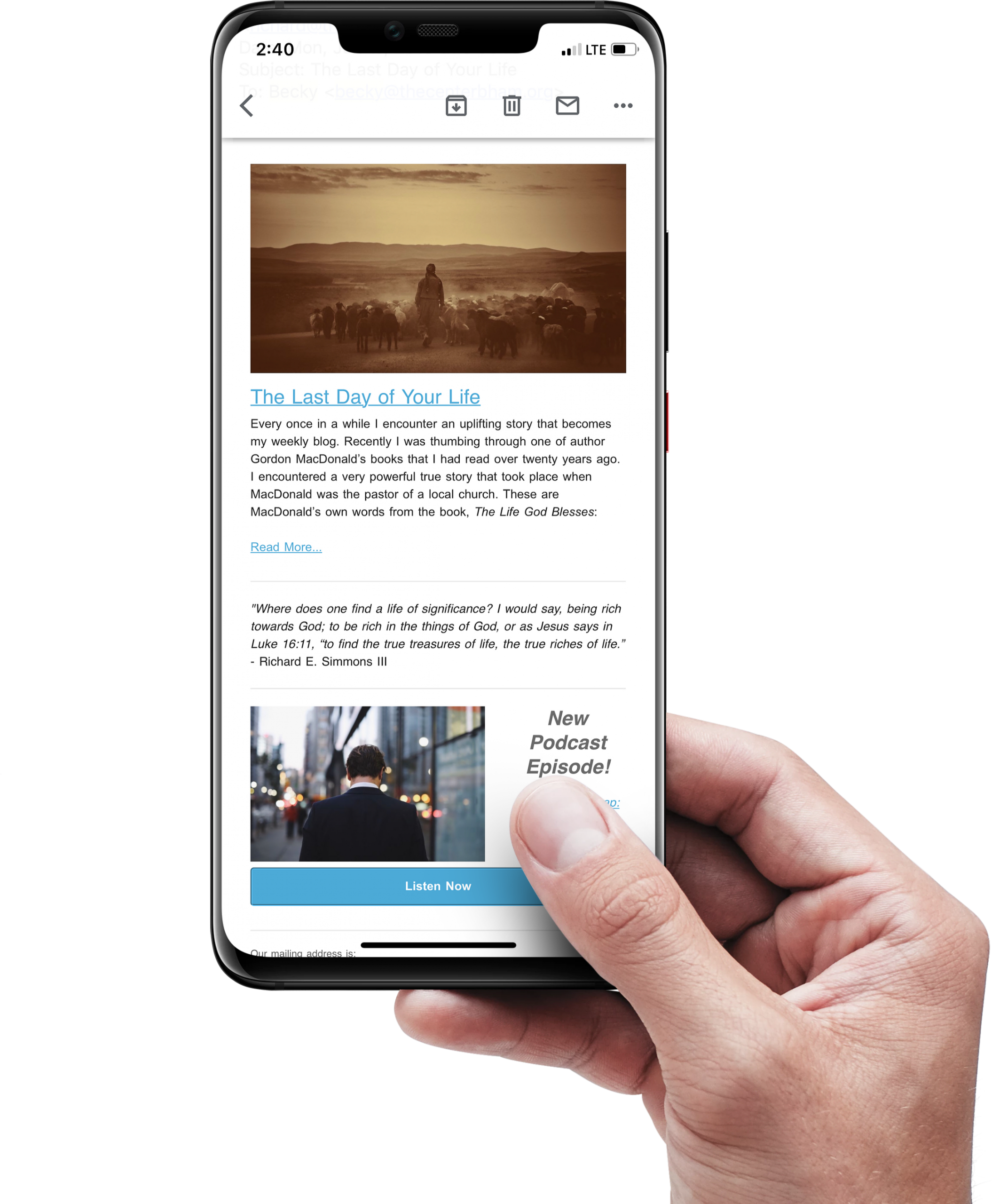
Add grace and understanding to your day with words from Richard E. Simmons III in your inbox. Sign-up for weekly email with the latest blog post, podcast, and quote.
Bulk discounts for 25 or more books! Call 205-789-3471 for prices.
For local orders in the Birmingham, AL area, enter Promo Code LOCAL at checkout to save shipping. We will email you when your order is ready for pickup.