

The great theologian, John Calvin, said that nearly all the wisdom we possess consists of two parts:
Knowledge of God
Knowledge of Self
I don’t think many people recognize the importance of really knowing yourself. The early Greek philosophers believed it was of great importance but that it was one of the most difficult things in life to obtain.
There are a number of ways to better know yourself, like taking the Myers Briggs test or reading the book, The Five Love Languages. Solomon tells us several times, listening seriously to criticism and rebuke will help us better see and understand our flaws and weaknesses.
Daily I also pray from Mathew 7:3-5, asking God to show me my weaknesses, my sins, and the logs in my life. We all have blind spots.
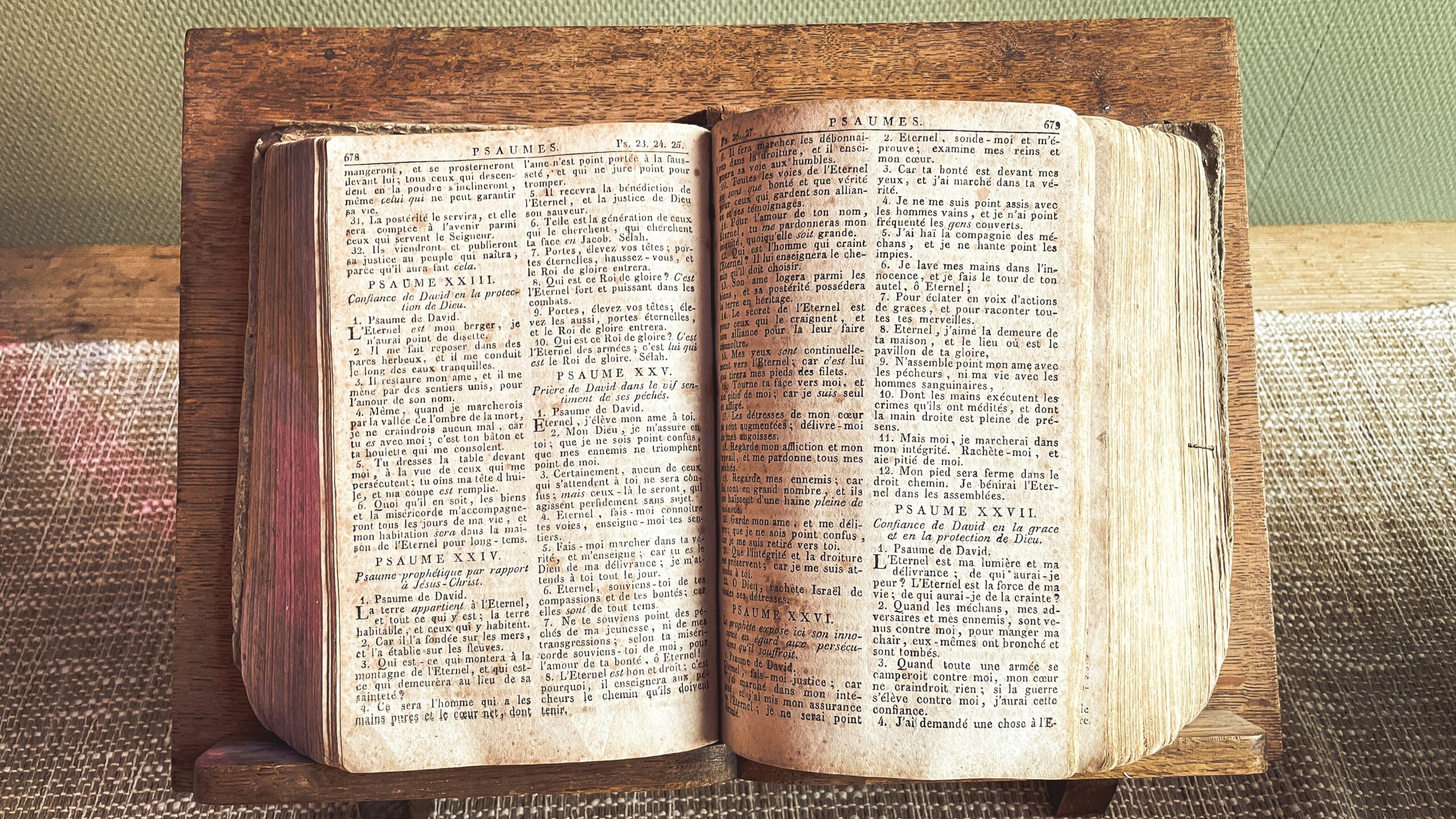
However, the best daily practice is to read God’s word, the Bible. In Hebrews 4:12 we learn that God’s word “reveals the thoughts and the intentions of the heart. It is like a spiritual mirror we so desperately need.
You can see the transforming power of the Bible in the life of Emile Caillet. He was born in a small town in France. He grew up agnostic, with no religious instruction of any kind. Until he turned twenty three, he had never even seen a Bible.
He served on the front lines in World War I and witnessed unspeakable atrocities. He reached a point where he truly believed he was destined to perish. As he reflected on the miserable condition he found himself in, he realized how inadequate his views were on the human condition. And he happened to be standing next to his best friend who took a bullet in the chest and died.
Cailliet was later wounded himself and confined for quite some time while recovering in the hospital. After he recovered, he returned to his graduate studies and began to think back on his experiences in the war.
During long night watches in the foxholes I had in a strange way been longing—I must say it, however queer it may sound—for a book that would understand me. But I knew of no such book.
He therefore decided to strike out on his own, and write his own book, a book that would explain the human condition. As time passed, he looked forward with great anticipation for the opportunity to read this precious anthology that would help him understand himself.
The day arrived; he sat down under a tree and began to read, only to experience a sobering disappointment. He realized that instead of speaking to his true condition, these passages only reminded him of the context in which he had chosen them at various times in the past. His life now was so very different from those younger years. Cailliet realized that “the whole undertaking would not work, simply because it was of my own making.”
That same day, as he returned home, dejected and dispirited, he found that his wife had come into possession of a Bible. While strolling their child in a baby carriage, she had encountered a minister who handed her a Bible that was written in French. Though Cailliet had been adamant that religion would be taboo in their home, he eagerly grabbed it from her. He recalls:
I literally grabbed the book and rushed to my study with it. I opened it and “chanced” upon the Beatitudes. I read, and read, and read—now aloud with indescribable warmth surging within . . . I could not find words to express my awe and wonder. And suddenly the realization dawned upon me. This was the book that would understand me! I needed it so much, yet, unaware, I had attempted to write my own—in vain. I continued to read deeply into the night, mostly from the Gospels. And, lo and behold, as I looked through them, the One of whom they spoke, the one who spoke and acted in them, became alive in me.
Cailliet eventually became a Christian. He went to seminary and became a professor at the University of Pennsylvania and then Princeton Theological Seminary.
It strikes me how the biblical narrative seems to truly have spiritual power behind it. As St. Paul said about the message of the Bible; “it did not come to you in a word only, but also in power.” (I Thessalonians 1:5).
Richard E Simmons III is the founder and Executive Director of The Center for Executive Leadership and a best-selling author.
Add grace and understanding to your day with words from Richard E. Simmons III in your inbox. Sign-up for weekly email with the latest blog post, podcast, and quote.
Bulk discounts for 25 or more books! Call 205-789-3471 for prices.
For local orders in the Birmingham, AL area, enter Promo Code LOCAL at checkout to save shipping. We will email you when your order is ready for pickup.