


This is the third and final segment in a three-part series. Part 1 and Part II are available here.
*****
In this final part of “Chasing the Future,” I want to share the last two perspectives that will enable us to find contentment.
The third perspective is that Paul was content because he realized he had found life’s great treasure. He speaks of this in a verse in Philippians 3:8:
I consider everything worthless in comparison to the unsurpassing value of knowing Christ Jesus my Lord for who I suffered the loss of all things, and consider it rubbish, so that I might gain this relationship with Christ (Philippians 3:8, author paraphrase).
If you’ll recall, Paul had at one time been a wealthy, prominent Pharisee; but upon becoming a Christian, he had to give up everything. However, he reveals that all that he had to give up was rubbish when compared to the surpassing value of having a relationship with Christ.
I think most men actually believe material wealth is the source of contentment. Modern culture aggressively promotes this prevailing attitude. “When I have this much wealth” or “When I earn this level of income,” then I will be content. Then, and only then, will life be good. I have had men sit across from me who have voiced their great contempt for God because they believe He has dealt them a bad financial hand. When they look at their friends and see how well they are doing, they are convinced that God has discriminated against them financially.
Yet God has indicated to us that material wealth is not all-important and, in fact, is not necessary for a person to be content. In 1 Timothy 6:7-8 Paul says:
For we brought nothing into the world, and we can take nothing out of it. But if we have food and clothing, with this we will be content (author paraphrase).
Paul is declaring that if we have our physical needs met, we can find contentment. That is all that we basically need to be content. Do we forget that the majority of us in the prosperous Western world have far more than our basic needs being met? Therefore, we are instructed to be grateful and to strive to be good stewards of the resources we have been given.
In a letter to the church in Corinth (2 Corinthians 6:10), Paul makes it clear that as far as material possessions went, he owned nothing; yet in reality, he considered himself to be a wealthy man. He was wealthy in the possessions that really matter in life. The great treasure in Paul’s life had been found in his relationship with Christ. It was the one possession his heart had been looking for, and therefore he was content.
Fourth, and finally, as I examine Paul’s life, I am amazed at how peaceful and content he was, even though he was always facing grave danger. The specter of death hung over him everywhere he traveled because so many people wanted to see him dead. It is truly remarkable to read in Philippians 1:21-23 where Paul boldly declares that eternal life in the presence of God is in fact far better than anything we can expect to experience in this earthly life, which is full of pain and difficulty. In fact, Paul looked forward to his death with great anticipation. He overcame the fear of death through the tangible hope of eternal life, which in my opinion is the primary reason he lived with such peace and contentment.
Though we go to great lengths not to think about it, the great obstacle to a life of peace and contentment is the natural fear of death. It is clearly our greatest enemy.
Dr. Armand Nicholi Jr., clinical professor of psychiatry at Harvard Medical School, has observed that the process of coming to terms with our mortality is extraordinarily painful. He contends that “the unbelievable brevity of our lives conflicts with our deep-seated yearning for permanence and with our lifelong fear of being separated from those we love—a fear that haunts us from infancy to old age.”
I share Nicholi’s assessment of the human condition. Our mortality is so distressing because of the realization that death separates us from those we love. We ultimately realize that we exit this life alone, and therefore, a sense of loneliness and fear grips us so powerfully.
Death is such a solitary experience.
And yet once again, here is another fear that men cannot share with others because admitting that we are fearful will only make us look weak. So we carry this burden around, increasing our sense of loneliness and alienation.
Have you ever wondered how different your life could possibly be if you were completely delivered from the fear of death? Take this a few steps further and ask, What if I was delivered not only from the fear, but also was able to look forward to the day of my death with great anticipation? How would that change the life I am living right now?
Of course, most of us want to know if this was a true reality in Paul’s life, and if so, how did he pull it off. I believe quite simply that Paul knew God intimately. He knew Him not just as God but also as his heavenly Father. Therefore, Paul saw death as nothing more than simply going home; he saw it as going home to be with his Father.
This blog was taken from The True Measure of a Man by Richard E. Simmons. Richard E Simmons III is the founder and Executive Director of The Center for Executive Leadership and a best-selling author.
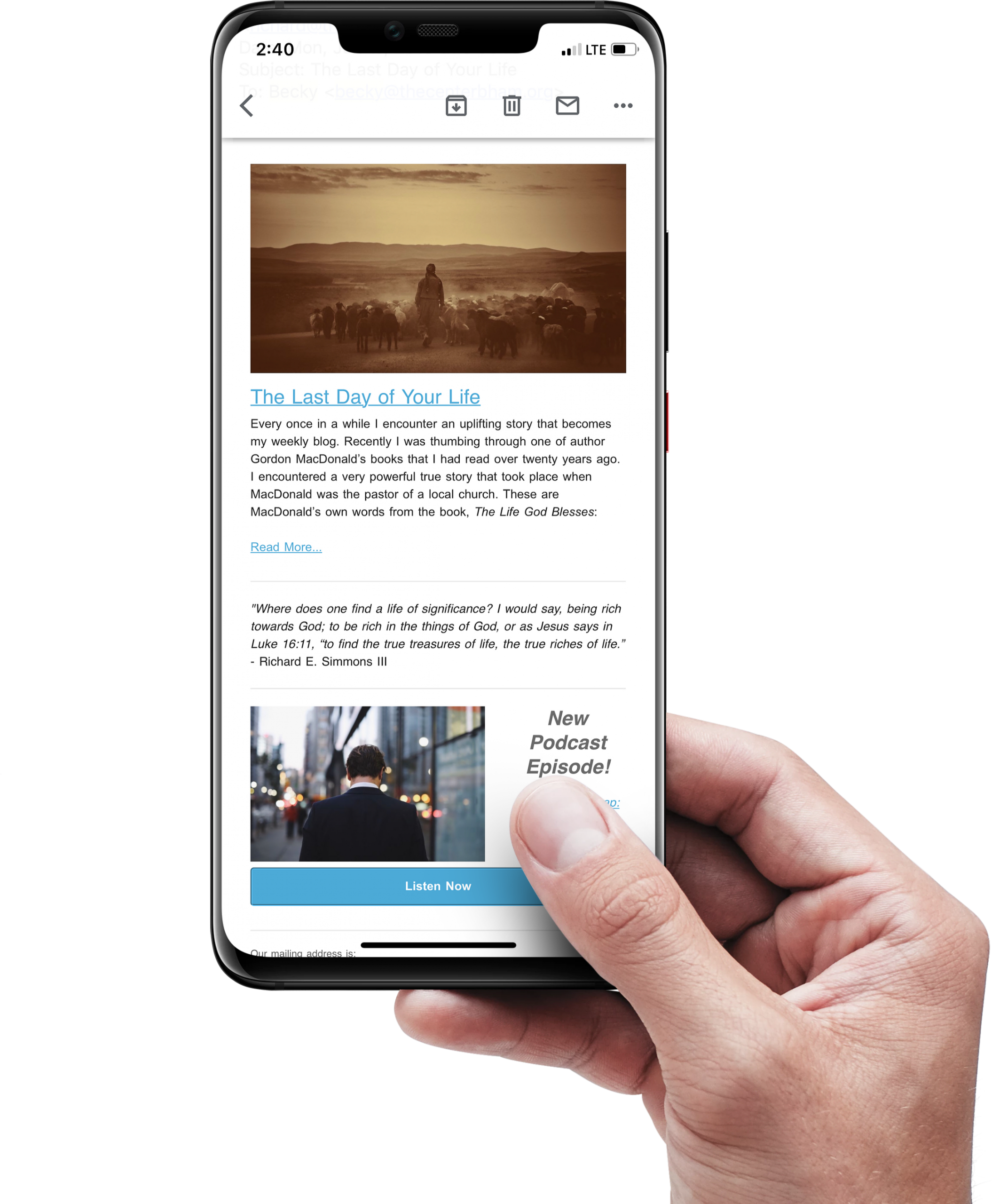
Add grace and understanding to your day with words from Richard E. Simmons III in your inbox. Sign-up for weekly email with the latest blog post, podcast, and quote.
Bulk discounts for 25 or more books! Call 205-789-3471 for prices.
For local orders in the Birmingham, AL area, enter Promo Code LOCAL at checkout to save shipping. We will email you when your order is ready for pickup.