

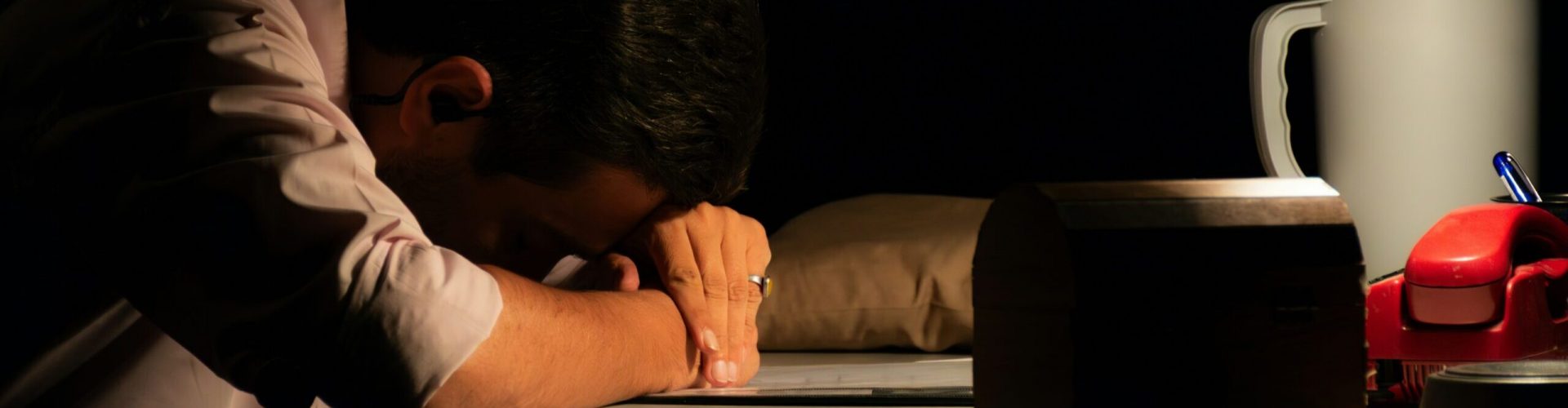
Have you ever caught yourself saying, “I’ll do it tomorrow,” or “Now just isn’t the right time”? Most of us have said those words at one time or another. But when tomorrow continually becomes another tomorrow, we may be dealing with something more serious than simply putting things off. We may be allowing procrastination to keep us from living up to our potential.
I recently read an article titled “If Not Now, when?” published by Raymond James, a national financial services firm. It had some great insights into the problem of procrastination, and how it keeps people from advancing in life.
One of the ways you can tell you are a procrastinator is if you always think “tomorrow” or “not now.” This is an indicator you are in all likelihood a procrastinator.
The article says:
But you don’t need to have a problem with procrastination for procrastination to become a problem.
Does this person sound familiar? He’s a hard charger at the office and a DIY MVP at home but puts off scheduling a medical visit until the thing on his arm grows limbs and dials the doctor itself.
A 2024 study of older adults and preventative health care showed a relationship between procrastination and delayed health screenings that could catch serious conditions early.
Here’s someone you may know from work. She’s inventive and eagerly dives into hard problems but has never filled out the weekly TPS report on time, no matter how often her manager lectures.
In a process-driven business environment, a seemingly minor clerical issue could be the bad apple spoiling an entire performance review.
It’s common to write off procrastinators as lazy or bad with managing time, but psychology research suggests that procrastination is not necessarily a matter of virtue but a symptom of emotions.
As Fuschia Sirois, a psychologist and author of books on procrastination, told the American Psychological Association’s podcast, Speaking of Psychology:
“Emotions are at the core of procrastination. And this comes from a lot of the research that suggests that the type of tasks that we procrastinate on are ones that we don’t enjoy. They’re ones that we find unpleasant, aversive and that can range the full spectrum from just simply boring to gut wrenching, nerve wracking and anxiety provoking.
“So anywhere along that spectrum of a task that makes us feel that – these negative emotions in one form or another – those are the tasks that we’re more likely to procrastinate on.”
As I did some additional research, I discovered another significant reason people procrastinate: the fear of failure.
I believe this is especially important when we consider one of the basic motivational drives in the lives of men: the desire for significance. Men want to know that their lives matter, that they have accomplished something meaningful, and that they have made a difference. The fear of losing that sense of significance can be incredibly powerful.
In fact, I believe many men are not necessarily driven by the desire to succeed as much as they are driven by the fear of failing. The possibility of failure can be so intimidating that they would rather avoid taking a risk than face the possibility of falling short. They put things off, delay important decisions, and sometimes never pursue the opportunities that could make a meaningful difference in their lives.
And that is where procrastination becomes so costly. It doesn’t just rob us of productivity; it can rob us of opportunities, personal growth, achievement, and ultimately, the satisfaction of knowing we made the most of our lives.
If something is important, don’t keep putting it off. Take the first step. Take the risk. Make the decision. Start today.
After all, the greatest regret may not be that we tried and failed, but that we never tried at all.
Richard E Simmons III is the founder and Executive Director of The Center for Executive Leadership and a best-selling author.
Add grace and understanding to your day with words from Richard E. Simmons III in your inbox. Sign-up for weekly email with the latest blog post, podcast, and quote.
Bulk discounts for 25 or more books! Call 205-789-3471 for prices.
For local orders in the Birmingham, AL area, enter Promo Code LOCAL at checkout to save shipping. We will email you when your order is ready for pickup.